Full Coverage for Retirees with Paid-Off Cars — Harrisburg, PA
Free to compare
When Full Coverage Stops Earning Its Cost
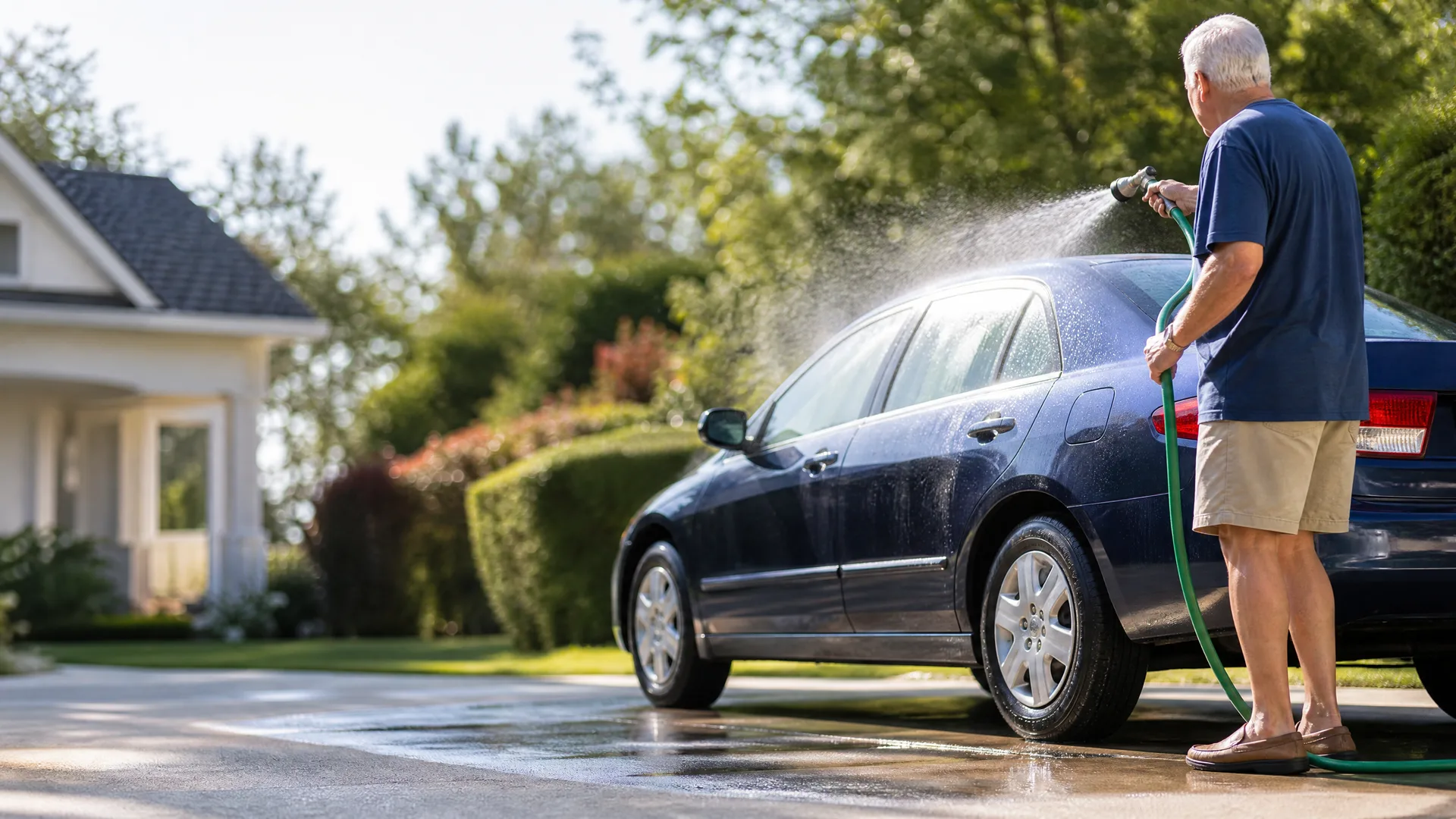
You paid off the sedan three years ago and stopped commuting two years before that. The bank no longer requires collision and comprehensive, but your renewal notice shows both coverages still in place at the same premium you carried when the car was new and you drove 15,000 miles annually. Your neighbor dropped collision the day she paid off her car; your brother-in-law kept it because his mechanic said vehicles hold value longer now. You opened this article because you suspect one of them made the right call and you need to know which.
The answer depends on three numbers specific to your situation: your vehicle's current market value, your collision deductible, and your annual mileage now that the commute is gone. Pennsylvania law does not require collision or comprehensive on any paid-off vehicle, but the coverage-fit decision is not binary. The math shifts when a retiree's driving profile no longer matches the risk the premium was designed to cover.
“The maximum collision claim is your vehicle's current market value minus your deductible, and that figure shrinks every renewal while your premium often does not.”

Lower Your Rate as a Retired Pennsylvania Driver
Get My Pennsylvania Retiree Auto Insurance Quote$5,000
PA Minimum Property Damage Liability
Pennsylvania requires $5,000 in property damage liability per accident under 75 Pa.C.S. § 1786, the lowest state-mandated minimum coverage that applies to collision claims you cause. Collision coverage on your own vehicle is entirely optional once the lien is satisfied.
75 Pa.C.S. § 1786
What Full Coverage Actually Pays on a Paid-Off Vehicle
Full coverage is not a product; it is shorthand for a liability policy bundled with collision and comprehensive. Liability pays for damage you cause to others and is legally required. Collision pays to repair your own vehicle after an accident you cause or a hit-and-run where the other driver is never identified. Comprehensive pays for non-collision damage: theft, vandalism, weather, falling objects, animal strikes. Both collision and comprehensive become optional the moment your lender releases the title.
The maximum collision claim is your vehicle's current market value minus your deductible. If your sedan is worth $8,000 today and you carry a $1,000 deductible, the most collision coverage will ever pay is $7,000. If you total the vehicle six months from now when it is worth $7,500, the check is $6,500. Collision does not restore the purchase price, the original value, or what you feel the vehicle is worth to you. It pays current market value at the time of total loss.
Comprehensive follows the same formula: market value minus deductible. A $12,000 vehicle with a $500 comprehensive deductible pays a maximum of $11,500 if stolen and never recovered. Comprehensive claims in Pennsylvania center on deer strikes, hail damage in the Laurel Highlands, and catalytic converter theft in urban counties. The coverage protects against loss you cannot prevent through defensive driving.
Your blocker: you lack current market value for your specific vehicle and your collision premium as a standalone monthly figure, so the deductible-to-premium breakeven is unresolvable without those two numbers.
Related Articles






State-Specific Considerations for Pennsylvania Retirees
Pennsylvania requires insurers to offer a mature-driver discount of at least 5% to operators aged 55 and older who complete a state-approved driver improvement course, per 75 Pa.C.S. § 1799.2. That discount applies to the entire premium, including collision and comprehensive, but most carriers do not apply it automatically at renewal. You must complete an approved course, submit the certificate to your agent or carrier, and confirm the discount appears on your next declaration page. Certificates expire after a carrier-specific period, typically three years, and the discount lapses unless you re-enroll and resubmit.
The discount reduces your collision premium by the statutory floor percentage, but it does not change the deductible-to-value math. A 5% reduction on $60 monthly collision premium saves $36 annually; helpful, but it does not address whether the $684 annual cost justifies a $7,000 maximum claim on a vehicle you drive 4,000 miles per year. The mature-driver discount and the collision-waiver decision are independent variables. Apply the discount first, then run the coverage-fit calculation on the reduced premium.
Comprehensive coverage in Pennsylvania centers on risks that do not scale with mileage. Deer-vehicle collisions peak in November and December across all 67 counties; hail season runs April through August in the central counties; catalytic converter theft concentrates in Allegheny, Philadelphia, and Delaware counties. A retiree in Dauphin County driving 4,000 miles annually faces the same comprehensive risk profile as a 15,000-mile commuter in the same ZIP code. Comprehensive premium should not carry the same mileage-based reduction logic applied to collision. The deductible-to-value test still applies, but mileage is not the determining variable for comprehensive.
5%
PA Statutory Mature-Driver Discount Floor
Pennsylvania law mandates insurers offer at least a 5% discount to drivers 55 and older who complete an approved course. The statute sets the floor; carriers may exceed it, but the amount above the minimum is set by individual carrier filing and verified at quote time.
75 Pa.C.S. § 1799.2

Liability Limits and Retirement-Asset Exposure
Dropping collision and comprehensive does not reduce your liability coverage, and for most retirees the liability-limit question matters more than the collision-waiver decision. Pennsylvania's state minimum liability is $15,000 per person for bodily injury, $30,000 per accident, and $5,000 for property damage. Those limits were set decades ago and have not kept pace with medical costs, vehicle replacement costs, or the asset exposure retirees carry in an at-fault accident.
A retiree with a paid-off home, retirement accounts, and savings faces full personal liability for any judgment exceeding policy limits. If you cause an accident that injures two people, each requiring $40,000 in medical treatment, your $30,000 per-accident limit pays the first $30,000 and you are personally liable for the remaining $50,000. The plaintiff can pursue your assets, including your home, to satisfy the judgment. Raising liability limits from state minimum to $100,000/$300,000 typically adds $15 to $25 monthly to your premium; umbrella policies covering $1 million in excess liability start around $20 monthly for retirees with clean records.
Most retirement-financial-planning guidance recommends liability limits equal to your net worth or higher. Collision coverage protects your vehicle; liability limits protect everything else you own. Retirees weighing whether to drop collision on a paid-off car should simultaneously review whether their liability limits reflect their current asset position.
When Keeping Collision Makes Sense for Retirees
Collision coverage remains cost-justified in three retiree scenarios. First, when your vehicle's market value exceeds $15,000 and you lack liquid savings to replace it out of pocket after a total loss. A retiree whose financial plan depends on the vehicle lasting another five years and who cannot absorb a $12,000 unplanned replacement cost should keep collision regardless of annual mileage. The premium is budgeted expense; the total loss without coverage is a financial-plan disruption.
Second, when your collision deductible is $250 or $500 and your vehicle value remains above $8,000. Low deductibles preserve more of the claim payment and the premium-to-benefit ratio stays favorable longer than high-deductible policies. Retirees who selected low deductibles during their working years and never raised them may find collision still pencils at current market value, particularly if they have applied the mature-driver discount and any available low-mileage reduction. Third, when you drive in high-density areas where hit-and-run and uninsured-motorist collision risk remains elevated. Collision pays when the other driver flees or carries no insurance and you cannot recover through uninsured-motorist property damage coverage. Urban and inner-ring suburban retirees face this risk profile more than rural drivers.

Compare Carriers That Underwrite Retiree Profiles Well
Not all carriers treat retiree profiles equally. Some apply the statutory mature-driver discount automatically at renewal once you age into eligibility; others require course completion and certificate submission every three years. Some offer mileage-based or usage-based programs accessible to retirees who no longer commute; others price all policies at standard-commuter exposure regardless of reported mileage. Pennsylvania-licensed carriers writing in Dauphin County include Erie, State Farm, Nationwide, Geico, Progressive, Allstate, and regional preferred-tier carriers including Donegal and Motorists Mutual. Each applies the statutory discount, but eligibility for low-mileage programs, telematics enrollment, and multi-policy bundling varies by carrier underwriting guidelines.
When comparing carriers, request quotes with identical liability limits and separate collision and comprehensive into standalone line items so you can see the monthly cost of each coverage independently. Ask each carrier whether they offer a mileage-based discount, what annual mileage threshold qualifies, and whether odometer verification or telematics enrollment is required. Confirm whether the mature-driver discount applies automatically at age 55 or requires course completion, and whether the discount renews automatically or lapses after a fixed period requiring re-enrollment. These procedural differences produce meaningfully different premiums for the same retiree profile across carriers.
The Deductible-to-Value Calculation Retirees Should Run
Start with your vehicle's current market value. Use your insurer's valuation tool, an online private-party listing aggregator, or a dealership trade-in quote. All three produce different figures; use the middle value. Subtract your collision deductible. The result is your maximum collision claim today. Now divide that maximum claim by your annual collision premium. If the result is less than three years, you are paying collision premium equal to one-third of your maximum benefit annually. Many retirees find the ratio is closer to two years, meaning the premium consumes half the maximum claim every 24 months.
The second variable is annual mileage. Collision risk scales with exposure: a retiree driving 4,000 miles per year in daylight hours on familiar routes carries materially lower collision risk than the 15,000-mile commuter the premium was originally underwritten for. Some Pennsylvania carriers offer low-mileage discounts starting at 7,500 annual miles; others require odometer verification or telematics enrollment. If your carrier has not re-rated your policy to reflect post-retirement mileage, your collision premium still prices commuter-era risk you no longer carry.
Get Your Free Quote
Get My Pennsylvania Retiree Auto Insurance QuoteFrequently Asked Questions
Does Pennsylvania require collision coverage on paid-off vehicles?
No. Pennsylvania requires liability coverage under 75 Pa.C.S. § 1786, but collision and comprehensive become optional once your lender releases the title. The decision to keep or drop collision is yours, based on your vehicle's current value and your financial ability to replace it after a total loss.
How do I find out my car's current market value for the collision decision?
Use your insurer's valuation tool, check private-party listings on aggregator sites for your make, model, year, and mileage, or request a trade-in quote from a dealership. All three produce different figures; the middle value is the most reliable estimate for collision maximum-claim purposes.
What is the mature-driver discount in Pennsylvania and how do I get it?
Pennsylvania law requires insurers to offer at least a 5% discount to drivers aged 55 and older who complete a state-approved driver improvement course, per 75 Pa.C.S. § 1799.2. You must complete an approved course, submit the certificate to your carrier, and confirm the discount appears on your declaration page. Most carriers do not apply it automatically.
Should I drop comprehensive coverage when I drop collision?
Not necessarily. Comprehensive covers theft, vandalism, weather damage, and deer strikes—risks that do not scale with how many miles you drive. A retiree in a county with high deer-collision rates or catalytic-converter theft may find comprehensive still cost-justified even after dropping collision. Run the same deductible-to-value test for each coverage independently.
Can I keep collision but raise my deductible to lower the premium?
Yes. Raising your collision deductible from $500 to $1,000 typically reduces the premium by 15% to 25%, but it also reduces your maximum claim by the deductible increase. Compare the annual premium savings to the additional out-of-pocket cost you would pay in a total loss before deciding.
Do low-mileage discounts apply to retirees in Pennsylvania?
Many Pennsylvania carriers offer low-mileage or usage-based discounts, but eligibility thresholds and verification requirements vary. Some start at 7,500 annual miles; others require telematics enrollment or annual odometer photos. Ask each carrier during the quote process what mileage programs they offer and how you qualify.
What happens to my premium if I drop collision mid-policy?
Your carrier will remove the collision premium from your remaining policy term and issue a prorated refund or credit toward your next renewal. Contact your agent or carrier directly to request the change; most process it within one billing cycle and the adjustment appears on your next statement.