
Full Coverage on Paid-Off Cars — Philadelphia
Free to compare
When the Lien Releases and the Premium Stays
You made the final car payment two years ago. The lien holder released their interest, the title arrived in your name, and nothing changed on your auto insurance renewal except the annual increase. Your carrier never contacted you about coverage options. Your agent never mentioned that collision and comprehensive are no longer mandatory. You kept paying the same premiums because no one told you the decision was now yours to make.
That silence is by design. Carriers and lenders communicate when a lien exists because the contract requires it. Once the lien releases, no one has a contractual obligation to tell you that full coverage is optional, that your 12-year-old sedan with 140,000 miles may not justify $850 in annual collision and comprehensive premiums, or that liability-only coverage paired with an emergency fund may serve a low-mileage retiree better. This article walks the coverage-fit decision Philadelphia retirees face once the car is paid off and the choice belongs to them alone.
“Collision and comprehensive became optional the day the lien released, and your carrier has no obligation to tell you.”

Lower Your Rate as a Retired Pennsylvania Driver
Get My Pennsylvania Retiree Auto Insurance Quote$5,000
Pennsylvania Liability Minimum Property Damage
Pennsylvania requires $5,000 minimum property damage liability per accident. Retirees dropping collision and comprehensive must maintain this liability floor plus $15,000 bodily injury per person and $30,000 per accident. Liability protects retirement assets in an at-fault crash; collision and comprehensive protect the vehicle itself.
75 Pa.C.S. § 1791 (Motor Vehicle Financial Responsibility Law)
What Full Coverage Actually Protects Once the Lien Is Gone
Collision coverage pays to repair or replace your vehicle after an accident you cause or a hit involving another driver, minus your deductible. Comprehensive coverage pays for theft, vandalism, weather damage, falling objects, and animal strikes, minus your deductible. Both coverages pay based on actual cash value at the time of loss: replacement cost minus depreciation. A 2012 vehicle that cost $28,000 new may carry an actual cash value near $6,000 today after twelve years of depreciation.
The lien holder required these coverages because their financial interest in the vehicle exceeded yours during the loan term. Once you own the car outright, the coverage protects only your equity. If the vehicle's actual cash value sits at $6,000, your collision premium runs $480 annually, and your deductible is $500, a total-loss claim nets you $5,500 after the deductible. You will have paid $480 in premium for access to $5,500 in coverage. Whether that exchange makes sense depends on the vehicle's value, your annual mileage, your cash reserves, and your comfort absorbing a loss without an insurance payout.
Liability coverage remains mandatory regardless of vehicle age or value. Pennsylvania requires $15,000 bodily injury per person, $30,000 per accident, and $5,000 property damage as the legal floor. Retirees with retirement accounts, home equity, or other assets typically carry higher liability limits because an at-fault accident exposes those assets to judgment. Dropping collision and comprehensive does not reduce liability requirements or change your legal obligation to carry financial responsibility coverage.
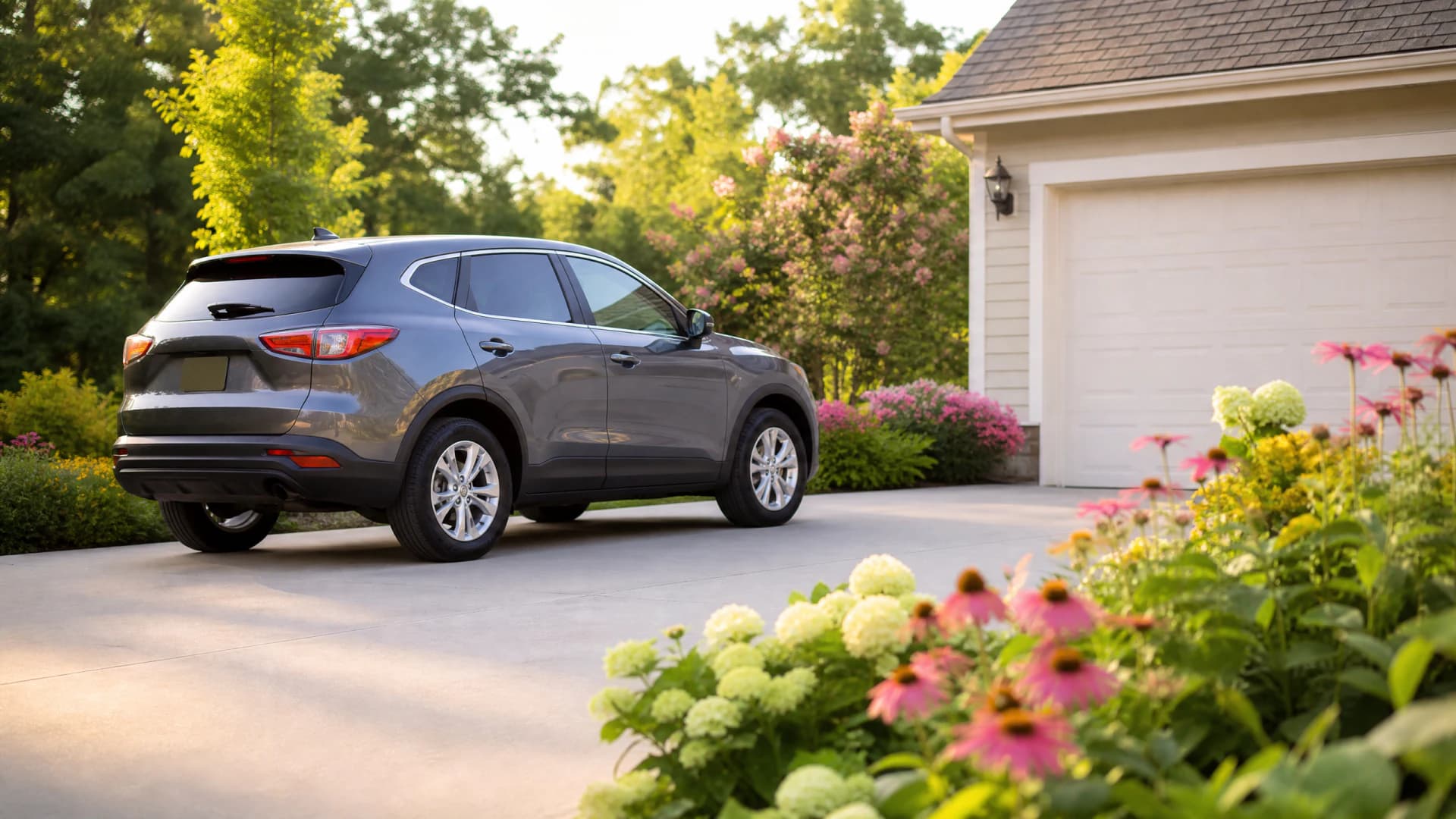
Collision and comprehensive became optional the day the lien released. Your carrier has no obligation to notify you, and most never do. The decision to keep or drop them is financial, not regulatory.
Related Articles







Mileage, Claim Exposure, and the Emergency Fund Alternative
You no longer drive to work five days per week. The 14,000 annual miles you logged during your working years dropped to 6,500 once the commute ended. Lower mileage reduces collision exposure directly: fewer miles driven means fewer opportunities for an accident. Comprehensive exposure stays roughly constant regardless of mileage since theft, hail, and vandalism occur whether the vehicle sits in your driveway or travels the road, but collision risk drops meaningfully as annual mileage falls below 8,000 miles.
An emergency fund allocated specifically for vehicle replacement serves the same function collision and comprehensive coverage served during the loan term. If the vehicle's actual cash value sits at $6,000 and you set aside $6,000 in a separate savings account earmarked for replacement, you self-insure the vehicle. A total loss costs you the $6,000 reserve rather than triggering a claim, but you avoid paying $770 annually in premiums. Over three years, the avoided premiums total $2,310, reducing your net reserve outlay to $3,690 if no loss occurs. If a loss does occur in year one, you spend the $6,000 reserve but avoid two additional years of premium payments.
This approach works best for retirees with cash reserves, low annual mileage, and vehicles whose actual cash value sits below $10,000. It does not work for drivers without savings, drivers whose vehicle represents a significant share of total assets, or drivers who cannot replace the vehicle out of pocket if a total loss occurs before the reserve accumulates. The question is not whether you can afford the premium; the question is whether paying the premium year after year makes better financial sense than reserving the cash and accepting the risk of loss.
Philadelphia-specific context: the city's higher-than-rural comprehensive claim rates due to vehicle theft and vandalism mean comprehensive coverage may justify its cost even when collision does not. Retirees in neighborhoods with elevated property crime rates should weigh comprehensive separately from collision rather than treating full coverage as a single all-or-nothing decision. Your agent can provide neighborhood loss data; request it before dropping comprehensive.
5%
Pennsylvania Mature-Driver Discount Floor
Pennsylvania law requires insurers to offer at least a five-percent discount to drivers aged 55 and older who complete a state-approved defensive driving course. The discount applies to liability, collision, and comprehensive premiums. Retirees keeping collision and comprehensive should confirm their carrier applied the course discount at renewal.
75 Pa.C.S. § 1799.2 (mature-driver course discount mandate)

Liability Limits and Retirement-Asset Exposure
Dropping collision and comprehensive does not reduce the liability decision. Pennsylvania's $15,000 per person, $30,000 per accident, and $5,000 property damage minimums leave retirement assets exposed in any at-fault accident producing serious injury or significant property damage. A single severe injury claim regularly exceeds $30,000 in medical costs alone. If you cause an accident producing $80,000 in bodily injury damages and carry only the $30,000 minimum, the injured party can pursue a judgment against your personal assets for the $50,000 gap.
Retirees with home equity, retirement accounts, or other assets typically carry $100,000 per person and $300,000 per accident bodily injury limits, plus $100,000 property damage coverage. These limits cost more than the state minimum but far less than collision and comprehensive on an aging vehicle. A Philadelphia retiree dropping $770 in collision and comprehensive premiums and raising liability limits from minimum to $100,000/$300,000/$100,000 often sees a net annual savings exceeding $400 after the liability increase. The higher liability limits protect assets the state minimum leaves exposed; the eliminated collision and comprehensive premiums stop paying for coverage that may never produce a claim large enough to justify the annual cost.
Course Discounts, Low-Mileage Programs, and Comparing What Remains
Pennsylvania requires insurers writing in the state to offer at least a five-percent discount to drivers aged 55 and older who complete a state-approved defensive driving course. The statute sets the floor; many carriers exceed it. The discount applies to liability, collision, and comprehensive premiums. Retirees keeping any coverage should confirm their carrier applied the mature-driver discount. If your renewal notice shows no discount and you completed an approved course within the past three years, contact your agent and request the discount be applied retroactively to the current term.
Low-mileage and usage-based programs reduce premiums for drivers logging under 7,500 annual miles. Programs vary by carrier: some require odometer verification at renewal, others install a telematics device tracking mileage electronically. Philadelphia retirees driving under 7,000 miles annually qualify for most programs. Ask your current carrier whether they offer mileage-based rating and how verification works. If your carrier does not offer it, comparison-shop carriers writing in Pennsylvania that do. Erie, Nationwide, and Allstate write in Pennsylvania and offer mileage-based programs; verify current availability and eligibility requirements at quote time.
Carriers treating retirees favorably in Pennsylvania: Erie and Auto-Owners maintain preferred-tier programs serving experienced drivers with clean records and low mileage. Both write liability-only and full-coverage policies. USAA serves military-affiliated retirees and offers strong mature-driver and low-mileage discounts. State Farm writes extensively in Pennsylvania and applies the statutory mature-driver discount; confirm at quote whether their current filed percentage exceeds the five-percent floor. Compare liability-only quotes from at least three carriers before dropping collision and comprehensive to confirm you have the best available rate on the coverage you are keeping.
Vehicle Value Against Annual Premium and Deductible
A conventional threshold treats collision and comprehensive as poor value when combined annual premiums exceed ten percent of the vehicle's actual cash value. For a vehicle worth $6,000, that threshold sits at $600 per year. If your Philadelphia renewal notice shows $480 for collision and $290 for comprehensive, the combined $770 premium crosses the threshold. Add a $500 deductible, and a modest fender-bender claim that costs $1,800 to repair pays you $1,300 after the deductible while you paid $770 in annual premium for access to that coverage. The math tightens further each year as the vehicle depreciates and the premium increases.
Your actual cash value appears on your policy declarations page under the vehicle description, sometimes labeled replacement cost or stated value depending on carrier. If the figure does not appear, request it from your agent or call the carrier's customer service line. Online valuation tools provide estimates, but your carrier's figure controls claim payouts and is the number against which you measure premium cost. Philadelphia retirees driving paid-off vehicles older than ten years frequently discover actual cash values between $4,000 and $8,000, making the ten-percent threshold a genuine decision point rather than a distant concern.
Get Your Free Quote
Get My Pennsylvania Retiree Auto Insurance QuoteFrequently Asked Questions
Will dropping collision and comprehensive increase my liability premium?
No. Liability premiums are calculated independently of collision and comprehensive coverage. Dropping physical-damage coverages does not change your liability rate. Your total premium decreases by the full amount of the eliminated collision and comprehensive charges.
Can I drop collision but keep comprehensive on a paid-off car?
Yes. Collision and comprehensive are separate coverages and can be dropped independently once no lien holder requires them. Many Philadelphia retirees in neighborhoods with elevated vehicle theft or vandalism rates drop collision while keeping comprehensive to protect against non-collision losses.
Does Pennsylvania require higher liability limits for retirees or older drivers?
No. Pennsylvania's minimum liability requirements apply uniformly regardless of age. The $15,000 per person, $30,000 per accident, and $5,000 property damage minimums are the legal floor for all drivers. Higher limits are a financial decision, not a regulatory requirement.
How do I find my vehicle's actual cash value for the coverage decision?
Your actual cash value appears on your policy declarations page, sometimes labeled replacement cost or stated value. If the figure is absent, call your carrier's customer service line and request it. This is the amount the carrier will pay for a total loss, minus your deductible, and the figure against which you measure premium cost.
If I drop collision and comprehensive now, can I add them back later?
Yes. You can request collision and comprehensive be added at any time by contacting your agent or carrier. Coverage typically begins the day you request it or the next calendar day. Premiums adjust pro-rata for the remainder of the current term.
Will my carrier cancel my policy if I drop collision and comprehensive?
No. Carriers cannot cancel a policy solely because you drop optional coverages. Liability coverage satisfies Pennsylvania's financial responsibility requirement. As long as you maintain required liability minimums, the policy remains in force.
Does the mature-driver discount apply if I only carry liability coverage?
Yes. Pennsylvania's mature-driver discount statute requires the discount apply to all coverages the policyholder carries, including liability-only policies. If you completed an approved course and carry only liability coverage, the discount applies to those liability premiums.