
Car Insurance After Dropping a Second Car — Harrisburg, PA
Free to compare
The Premium That Didn't Drop When the Second Car Left
You sold the Camry your spouse used to drive to work, or you let the lease expire on the second sedan now that no one commutes anymore. You called the agent, reported the change, and the policy adjusted. But when the next bill arrived, the premium dropped maybe $40 a month when you expected it to fall by hundreds. The car is gone, but the cost structure barely moved.
This happens because most carriers freeze discount structures mid-term. The multi-car discount you earned when you insured two vehicles doesn't automatically recalculate into the mature-driver, low-mileage, and paid-in-full discounts a single-car retired household in Harrisburg qualifies for now. That recalculation waits for renewal, and only if you or your agent explicitly request it. Until then, you're paying for a discount architecture built around a two-car commuting household that no longer exists.
“The multi-car discount vanished, but the mature-driver and mileage programs that should replace it won't apply unless you ask.”
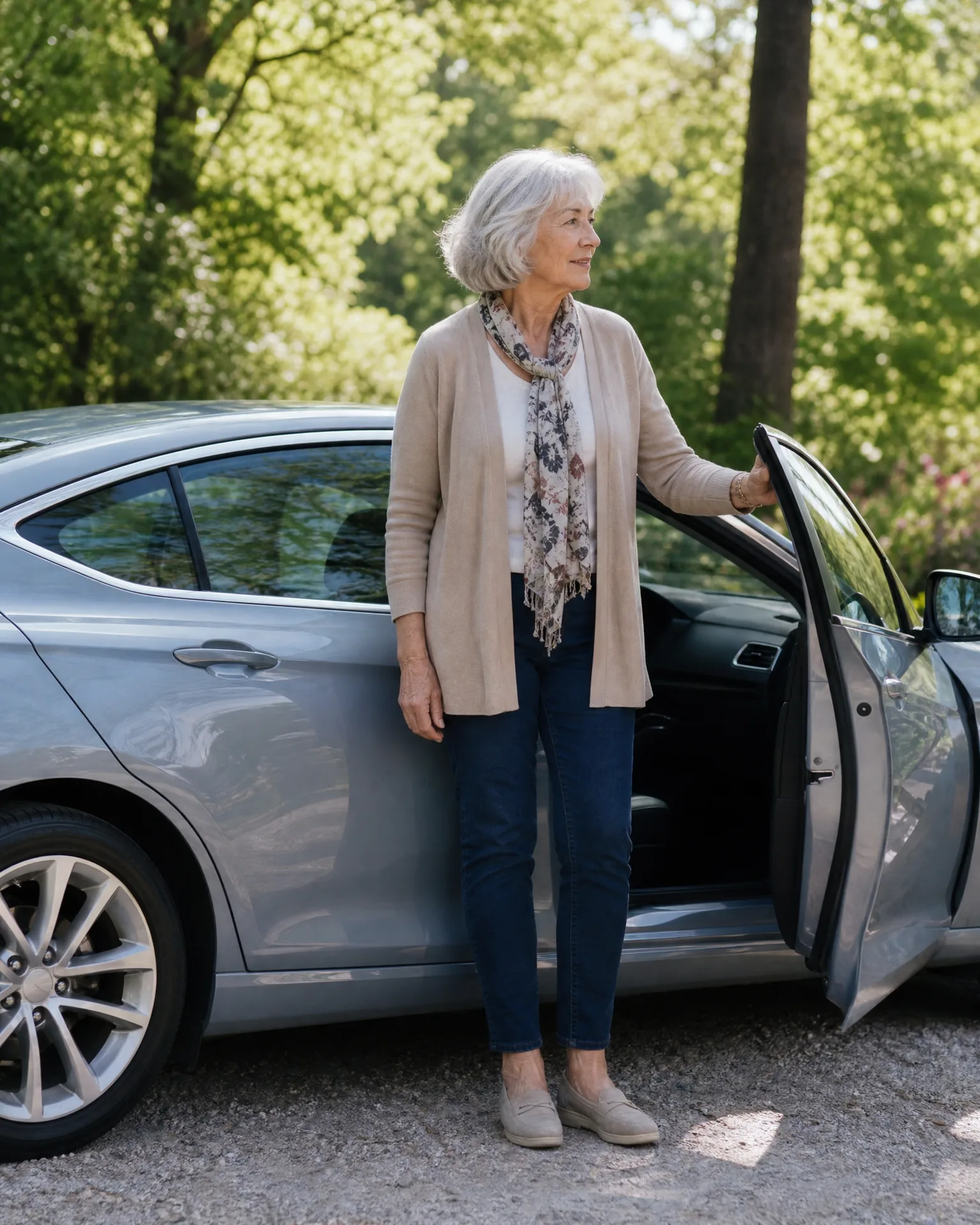
Lower Your Rate as a Retired Pennsylvania Driver
Get My Pennsylvania Retiree Auto Insurance Quote5%
Pennsylvania Mature-Driver Discount Floor
Pennsylvania law requires insurers to offer at least a 5% discount to drivers 55 and older who complete a state-approved defensive driving course. Most single-car retiree households never claim it because the multi-car discount from the old policy structure eclipsed it, and agents don't re-optimize at vehicle removal.
75 Pa.C.S. §1799.2
Why the Discount Structure Stayed With the Old Policy Shape
When you insured two vehicles, the carrier applied a multi-car discount: typically 10 to 25 percent off each vehicle's base premium. That discount rewarded insuring multiple assets under one policy, and it was usually the largest single discount on the account. When you removed the second car, the carrier deleted that vehicle's premium but kept the surviving vehicle rated under the same discount structure because the system treats mid-term vehicle changes as endorsements, not full policy re-rates.
A full re-rate happens at renewal. That's when the carrier reassesses the household: one vehicle now, likely paid off, driven fewer than 7,500 miles a year by a retired policyholder with a clean record. That profile qualifies for mature-driver discounts, low-mileage programs, and possibly usage-based telematics that reward light driving. But none of those apply automatically. The agent or the policyholder has to request the re-rate and ask which programs fit the new one-car household. Without that request, the policy renews under the old architecture with the multi-car discount zeroed out and nothing structural replacing it.
The blocker: your carrier still sees a two-driver household discount profile frozen at last renewal, not a one-car retiree household eligible for mileage and course-based programs you've never enrolled in.
Related Articles
Dropped Second Car Insurance in Bethlehem PA
6/14/2026

Car Insurance After Dropping a Second Car
6/14/2026

Retiree Car Insurance After Dropping a Second Car
6/14/2026

Car Insurance After Dropping Second Car
6/14/2026

Insurance After Dropping Second Car Lancaster
6/14/2026

Dropping a Second Car in Pennsylvania
6/14/2026

How to Re-Rate the Policy Before Renewal Locks It In
Call your agent or the carrier's customer service line and state that you removed a vehicle and want the policy re-rated to reflect a single-car retired household. Ask three questions: does the carrier offer a mature-driver discount for completing a state-approved defensive driving course, and if so, which courses qualify? Does the carrier offer a low-mileage discount or usage-based program for drivers logging under 7,500 miles annually? If you pay the full six-month or annual premium at once rather than monthly installments, does the carrier offer a paid-in-full discount, and how does it compare to what you're getting now?
Request the re-rate in writing, either by email or through the carrier's online portal, so there's a record that you asked before renewal. If the agent says the system will handle it automatically at renewal, ask for confirmation of which discounts will apply and at what percentages. Automatic handling often means the multi-car discount disappears but nothing replaces it unless you've explicitly enrolled in the course, mileage tracking, or other programs that require your action first.
If the carrier cannot re-rate mid-term, ask for the renewal date and set a calendar reminder 45 days before that date to compare what your current carrier offers a one-car retiree household against what Erie, State Farm, and other preferred-tier carriers writing in Pennsylvania offer the same profile. Erie is headquartered in Pennsylvania, writes preferred-tier coverage, and structures senior policies with course and mileage discounts that often beat the frozen multi-car rate a standard-tier carrier locked in three years ago when you had two cars and two commutes.

The Medical Payments and Collision Decision on a Paid-Off Car
Dropping the second car often means the one you kept is paid off or nearly paid off. That removes the lender's requirement to carry collision and comprehensive coverage, which makes this the moment to decide whether those coverages still earn their cost. If the car is worth less than $5,000 and collision coverage costs more than $400 annually, you're paying 8% of the vehicle's value each year to insure it against damage you could afford to replace out of pocket.
Medical payments coverage and personal injury protection intersect with Medicare for Pennsylvania retirees. Medicare is your primary payer for injuries after a car accident once you're 65 or older, regardless of fault. Medical payments coverage on your auto policy pays secondary, covering deductibles and copays Medicare doesn't. If your policy carries $5,000 in medical payments coverage and you're already on Medicare, ask your agent what that coverage costs annually and whether the overlap justifies it. For many single-car retiree households, dropping medical payments or reducing it to the state minimum reduces premium without exposing assets, because Medicare covers the primary expense.
Liability limits, by contrast, protect retirement assets in an at-fault accident. Pennsylvania's minimum liability requirement is $15,000 per person and $30,000 per accident for bodily injury, and $5,000 for property damage. Those limits were set decades ago and are well below what a serious at-fault accident costs now. If you own a home, have retirement accounts, or carry any assets an at-fault judgment could reach, consider raising liability to $100,000 per person and $300,000 per accident. The incremental cost is often under $15 a month, and it's the coverage that protects what you've built over a lifetime of work.
25
Carriers Writing Auto Coverage in PA
Twenty-five carriers write personal auto insurance in Pennsylvania and are listed in the injected data block, spanning preferred, standard, and non-standard tiers. Eight of those carriers offer online quotes; the rest require phone or broker contact. Comparing a one-car retiree profile across three preferred-tier carriers takes under 45 minutes and surfaces the discount structures each uses.
Which Harrisburg Carriers Handle One-Car Retiree Policies Best
Erie writes preferred-tier coverage in Pennsylvania, offers online and broker quotes, and structures mature-driver and low-mileage programs that replace multi-car discounts cleanly. State Farm writes preferred-tier as well, supports the state-mandated course discount, and allows agents to re-rate mid-term when household composition changes. Both carriers are listed in the injected carrier block and confirmed to write in Pennsylvania.
Geico and Progressive offer usage-based telematics programs that track actual mileage and driving behavior, which benefits retirees driving under 7,500 miles annually. Both provide online quotes and operate in the standard tier. If your current carrier is standard or non-standard and your driving record is clean, comparing against Erie or State Farm often surfaces a lower premium with higher liability limits, because preferred-tier carriers price clean-record retirees more favorably than standard-tier carriers price two-car households.

Request the Re-Rate Now, Compare Before Renewal Locks
Call your current carrier today and request a policy re-rate to reflect the single-car household. Ask which mature-driver, low-mileage, and paid-in-full discounts apply and what you need to do to enroll. If the carrier cannot re-rate until renewal, note the renewal date and set a reminder 45 days out to compare quotes from Erie, State Farm, Geico, and Progressive for the same coverage limits on a one-car retired household in Harrisburg. The comparison takes under an hour and confirms whether your current carrier's renewal offer reflects the discount structure a retiree profile qualifies for, or whether you're still paying for a commuter-era household that ended when the second car left the driveway.
What a One-Car Retiree Policy in Pennsylvania Should Look Like
Start with the state-mandated mature-driver discount. Pennsylvania requires every insurer writing auto coverage in the state to offer at least a 5% discount to drivers 55 and older who complete a state-approved defensive driving course. The course runs about six hours, costs vary by provider, and completion certificates are valid for three years. Your carrier applies the discount at the next renewal after you submit the certificate. Most agents won't mention this unless you ask, because the multi-car discount you used to have was larger and agents assume you know about the course option.
Then layer in mileage-based programs. If you're driving under 7,500 miles a year now that the commute is gone, ask whether your carrier offers a low-mileage discount or a usage-based program that tracks actual miles driven. Geico, Progressive, Nationwide, and Allstate all write in Pennsylvania and offer telematics or mileage-verification programs. The discount structure shifts from insuring two cars driven 15,000 miles each to one car driven 5,000 miles with no daily commute. That's a fundamentally different risk profile, and the premium should reflect it.
Get Your Free Quote
Get My Pennsylvania Retiree Auto Insurance QuoteFrequently Asked Questions
Does my car insurance automatically adjust when I remove a vehicle from the policy?
The carrier removes the second vehicle's premium mid-term, but discount structures typically freeze until renewal. Multi-car discounts disappear, but mature-driver, low-mileage, and course-based discounts don't apply automatically. You or your agent must request a policy re-rate and enroll in programs that fit a single-car household.
How much does the Pennsylvania mature-driver discount reduce my premium?
Pennsylvania law requires insurers to offer at least a 5% discount to drivers 55 and older who complete a state-approved defensive driving course. Individual carriers may offer more than the statutory floor, but the amount is set by carrier filing. Ask your insurer what their mature-driver discount percentage is and which courses they accept.
Do I still need collision coverage on a paid-off car?
Collision coverage is a financial judgment call once the lender no longer requires it. If the car is worth less than $5,000 and collision costs more than $400 annually, you're paying 8% of the vehicle's value each year to insure against damage you could afford to replace out of pocket. Many retirees drop collision and keep comprehensive and liability.
Which Pennsylvania carriers offer low-mileage discounts for retirees?
Geico, Progressive, Nationwide, and Allstate all write in Pennsylvania and offer low-mileage or usage-based telematics programs. These programs track actual miles driven and reward drivers logging under 7,500 miles annually. Ask each carrier which program they offer and how the discount compares to the multi-car discount structure your old policy used.
Can I re-rate my policy mid-term or do I have to wait for renewal?
Most carriers allow mid-term re-rating when household composition changes, but it's not automatic. Call your agent or customer service line, state that you removed a vehicle, and request a full policy re-rate to reflect a single-car retired household. If the carrier cannot re-rate until renewal, compare quotes from other carriers 45 days before your renewal date.
How does medical payments coverage work with Medicare after age 65?
Medicare becomes your primary payer for accident injuries once you turn 65, regardless of fault. Medical payments coverage on your auto policy pays secondary, covering Medicare deductibles and copays. If your policy carries $5,000 in medical payments and you're on Medicare, ask your agent what that coverage costs annually and whether the overlap justifies keeping it.