Full Coverage on Paid-Off Cars — Erie, PA
Free to compare
You Own the Car; The Premium Stayed the Same
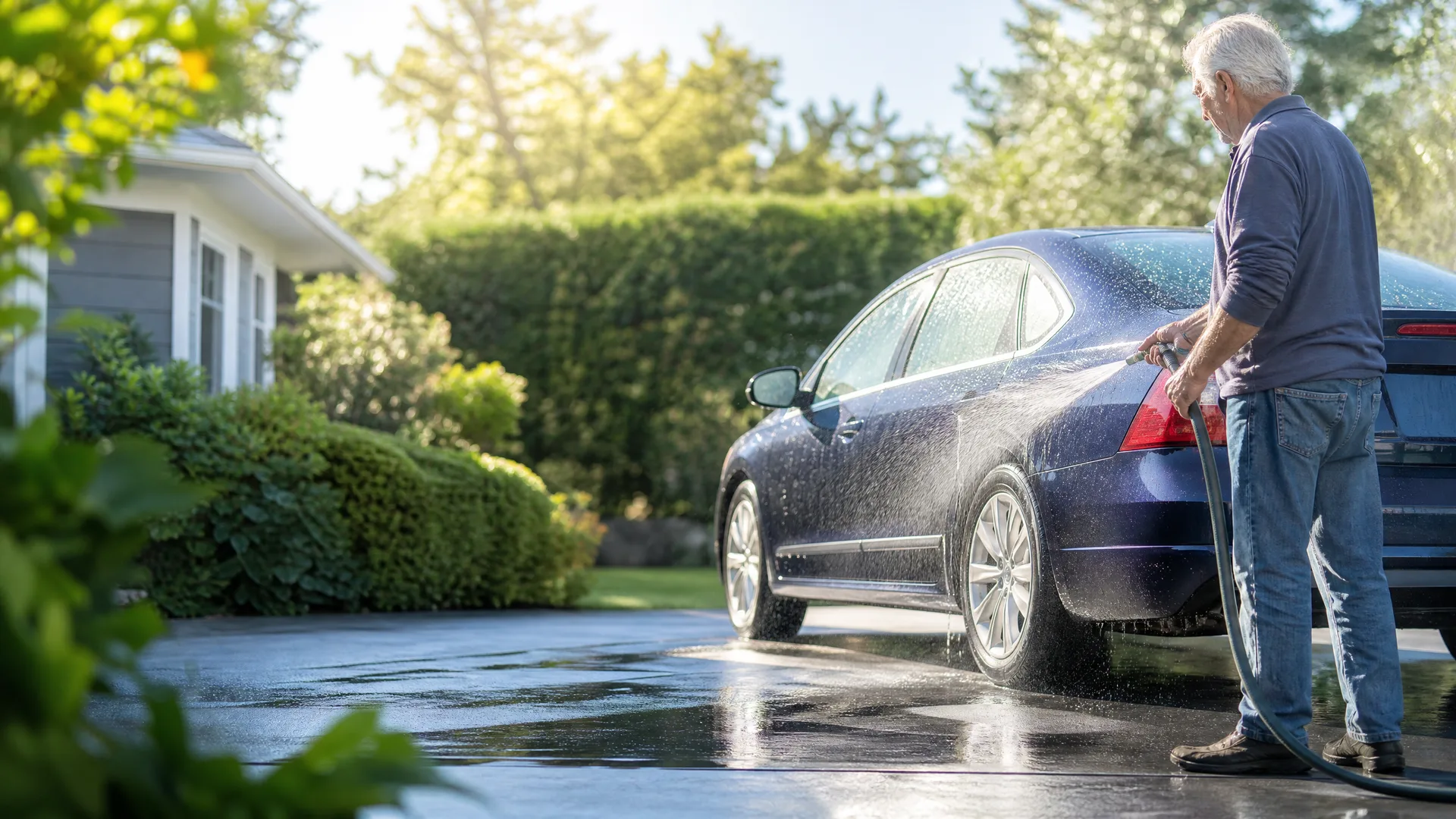
You made the final payment on your car three months ago and the title arrived last week. When the renewal notice came this month, the premium sat exactly where it has been for the past five years: full coverage, same cost, no change. Your lender no longer requires collision and comprehensive because no lender exists anymore, but the carrier renewed both automatically because you never asked them to stop.
Erie retirees driving paid-off sedans, SUVs, and trucks of moderate age face this exact friction every renewal cycle. Pennsylvania law requires liability, personal injury protection, and in some cases uninsured motorist coverage, but once you own the vehicle outright the state imposes no collision or comprehensive mandate. The coverage question becomes purely economic: does what the policy would pay after deductible justify what you pay annually to keep it?
“The carrier renewed full coverage automatically because you never asked them to stop, not because the law or the loan requires it anymore.”

Lower Your Rate as a Retired Pennsylvania Driver
Get My Pennsylvania Retiree Auto Insurance Quote$5,000
PA Minimum Property Damage
Pennsylvania requires $5,000 minimum property damage liability per accident under 75 Pa.C.S. This is the floor for covering another driver's vehicle if you cause the accident; it has no bearing on whether you insure your own car for physical damage.
75 Pa.C.S. (Pennsylvania Vehicle Code)
What Full Coverage Actually Protects on a Paid-Off Vehicle
Full coverage is industry shorthand for a liability policy with collision and comprehensive added. Collision pays to repair or replace your vehicle after an accident you cause or a single-car incident; comprehensive pays for theft, vandalism, weather damage, and animal strikes. Both carry a deductible you choose at purchase, typically $500 or $1,000 in Erie. The policy pays the actual cash value of the vehicle minus your deductible, not replacement cost and not what you paid originally.
Actual cash value means the car's current market value accounting for age, mileage, and condition. A 2015 sedan with 110,000 miles that you paid off last month does not carry the same value it held in 2015. If that vehicle is worth $6,500 today and you carry a $1,000 deductible, the maximum the comprehensive policy pays for a total theft is $5,500. If your annual collision and comprehensive premium together runs $720, you are paying $720 every year to protect $5,500 of value, and only after the first $1,000 of loss.

The unresolved question: you lack a current credible estimate of what your vehicle would sell for in Erie's market right now, and without that figure the coverage decision stays abstract.
Related Articles




What Happens When You Drop Physical Damage Coverage
When you call your carrier or agent to remove collision and comprehensive, the policy continues with liability, personal injury protection, and any uninsured or underinsured motorist coverage you elected. Pennsylvania still requires proof of financial responsibility, so you cannot drop liability to the point where you fall below the state minimums: $15,000 bodily injury per person, $30,000 per accident, $5,000 property damage, and mandatory PIP. Dropping collision and comprehensive leaves those minimums untouched.
Your premium drops immediately at the next renewal or mid-term if you request the change before the renewal date. Some carriers process the change within the current term and issue a prorated refund; others apply it at renewal only. Ask your agent which applies to your policy. The savings vary by vehicle, your location within Erie, and your driving record, but removing both coverages typically cuts 30 to 50 percent from the total premium for retirees with clean records driving older paid-off vehicles.
The exposure you accept: if you cause an accident or your car is stolen, you pay the full repair or replacement cost from your own funds. Liability still covers the other driver's vehicle and medical bills up to your policy limits, but your own car is your responsibility. If that risk fits within your financial capacity and the annual premium exceeds the rational insurable value, the decision is straightforward.
5%
PA Mature-Driver Discount Floor
Pennsylvania requires insurers to offer at least a 5% discount to drivers 55 and older who complete a state-approved defensive driving course, under 75 Pa.C.S. §1799.2. The discount applies to the entire premium, not just liability, so it reduces whatever coverage you keep.
75 Pa.C.S. §1799.2

Liability Limits Matter More After You Drop Collision
Retirees who drop physical damage coverage often discover they have been underinsured on the liability side for years. Pennsylvania's $15,000 per person bodily injury minimum barely covers a single emergency room visit and short hospital stay; a serious two-car accident in Erie can generate medical bills and lost-wage claims well into six figures. If you cause that accident and carry only the minimum, the other driver's attorney will pursue your personal assets after the policy limit exhausts.
Once you own your home, hold retirement accounts, or maintain taxable investment assets, your liability limits should reflect what you would lose in a judgment. Many Erie retirees carry $100,000 per person and $300,000 per accident, or step up to a $1 million umbrella policy that sits above the auto liability layer. The umbrella premium is modest because it only pays after the underlying auto policy exhausts, and it protects your retirement assets across all liability exposures: auto, homeowners, and personal injury.
Comparing Carriers for Retirees Who Drop Full Coverage
Erie is headquarters to Erie Insurance, a preferred-tier carrier writing in Pennsylvania with an agent-only model and a strong regional reputation among long-tenured drivers. Retirees switching from full coverage to liability-only sometimes find that the carrier who offered the best full-coverage rate no longer leads once physical damage premiums drop out. State Farm, Nationwide, and Erie Insurance all write liability policies for senior drivers in Erie and all participate in Pennsylvania's mature-driver discount mandate, but their base rates and underwriting treatment of older vehicles differ.
Request liability-only quotes from at least three carriers once you decide to drop collision and comprehensive. Provide your current coverage limits, your mature-driver course completion status, your annual mileage, and whether you qualify for any low-mileage or usage-based program. Some carriers offer online quoting; others require a phone call or agent visit. The mature-driver discount applies only after you submit proof of course completion, so if you have not yet taken an approved course, ask each carrier what the discount would be and whether their quote includes it or requires submission first.

Make the Call Before Your Next Renewal
Pull your most recent renewal declaration page and write down three numbers: your current annual premium, the portion assigned to collision, and the portion assigned to comprehensive. Look up your vehicle's actual cash value using your exact mileage and condition. Subtract your deductible from that value, then compare what remains against your annual physical-damage premium using the ten-times threshold. If the car falls below the line and you would handle a total loss from savings, contact your agent or carrier to remove both coverages effective at your next renewal. If you have not completed a state-approved mature-driver course, enroll now so the certificate arrives before the renewal date and the statutory discount applies to whatever coverage you keep.
The Replacement-Value Threshold Calculation
The conventional threshold is ten times your annual premium. If your combined collision and comprehensive premium runs $720 per year, the threshold sits at $7,200. A vehicle worth less than $7,200 costs more to insure over its remaining life than the maximum the policy would ever pay. Check your most recent renewal declaration page: the premium for physical damage coverage appears as separate line items, not bundled into the total. Add collision plus comprehensive to find your annual cost.
To find your vehicle's actual cash value, check NADA Guides, Kelley Blue Book, or Edmunds using your exact year, make, model, mileage, and condition. Erie's used-car market prices reflect regional demand; a 2014 Chevrolet Malibu with 95,000 miles in good condition may list between $6,000 and $7,500 depending on trim and recent maintenance. If your calculation puts the vehicle below your threshold and you would absorb a total loss from savings without financial distress, collision and comprehensive become optional.
Get Your Free Quote
Get My Pennsylvania Retiree Auto Insurance QuoteFrequently Asked Questions
Does Pennsylvania require full coverage on a paid-off car?
No. Pennsylvania requires liability, personal injury protection, and proof of financial responsibility, but once you own the vehicle outright the state does not mandate collision or comprehensive coverage. Those coverages protect your own car and become optional when no lender holds a security interest.
What is the actual cash value of my car and how does it affect my coverage decision?
Actual cash value is your vehicle's current market value accounting for age, mileage, and condition. If your car is worth $6,000 and you carry a $1,000 deductible, the maximum a total-loss claim pays is $5,000. Compare that $5,000 against your annual collision and comprehensive premium to determine whether the coverage still earns its cost.
Will dropping collision and comprehensive lower my premium immediately?
Some carriers apply the change mid-term and issue a prorated refund; others apply it only at the next renewal. Ask your agent which process your carrier follows. The savings typically range from 30 to 50 percent of the total premium for retirees driving older paid-off vehicles with clean records.
Can I drop full coverage but keep higher liability limits?
Yes. Collision and comprehensive are independent of your liability limits. Many retirees drop physical damage coverage on older vehicles while increasing bodily injury and property damage limits to $100,000/$300,000 or adding an umbrella policy to protect retirement assets in a serious at-fault accident.
Does the Pennsylvania mature-driver discount apply if I drop collision and comprehensive?
Yes. Pennsylvania requires insurers to offer at least a 5% discount to drivers 55 and older who complete a state-approved defensive driving course under 75 Pa.C.S. §1799.2. The discount applies to your entire premium, so it reduces the cost of whatever coverage you keep, including liability-only policies.
What happens if I drop full coverage and then total my car?
You pay the full repair or replacement cost from your own funds. Liability coverage still pays for the other driver's vehicle and medical bills if you caused the accident, but your own car is not covered. If you would handle that loss from savings without financial distress, the exposure may be acceptable given the annual premium you save.