
Cheapest Car Insurance for Retired Drivers — Erie, PA
Free to compare
When Your Erie Premium Rose Though Nothing Changed
You drove 8,000 miles last year instead of 18,000, your record is still clean, and your Erie renewal notice arrived with a higher premium than last year. The commute is gone, the second car is sold, and the vehicle is paid off. The rate should have dropped, not climbed.
The disconnect is structural. Most carriers in Pennsylvania price retirees using the same risk model they apply to working-age drivers, even though your actual exposure dropped by half when you stopped commuting. Pennsylvania law mandates that insurers offer a mature-driver discount of at least 5%, but the discount doesn't appear on your renewal unless you complete a state-approved defensive driving course and submit the certificate. The carrier won't apply it automatically, and the agent won't remind you at renewal. If you never submit proof, you keep paying the higher rate indefinitely.
“The carrier won't apply the discount automatically, and the agent won't remind you at renewal. If you never submit proof, you keep paying the higher rate indefinitely.”

Lower Your Rate as a Retired Pennsylvania Driver
Get My Pennsylvania Retiree Auto Insurance Quote5%
PA Statutory Mature-Driver Discount Floor
Pennsylvania law requires every auto insurer writing in the state to offer a discount of at least 5% to drivers age 55 and older who complete a state-approved driver improvement course. Carriers may exceed the statutory floor, but the minimum is guaranteed by statute.
75 Pa.C.S. §1799.2
The Discount Mandate Most Erie Drivers Never Activate
Pennsylvania is one of the states where the mature-driver discount is required by law, not optional. Every carrier writing auto insurance in Pennsylvania must offer it. The statute names a floor: at least 5% for operators age 55 and older who complete an approved driver improvement course. Some carriers offer more, but all must offer the statutory minimum.
The Erie market includes carriers across every tier. State Farm, GEICO, Progressive, Nationwide, and Erie Insurance all write here and all comply with the mandate. The statutory discount applies regardless of which carrier you use. What varies is how much each carrier exceeds the 5% floor, how their low-mileage and usage-based programs layer on top, and how aggressively they market to retirees.
The catch is activation. The discount is not age-triggered automatically when you turn 55. You must complete a Pennsylvania-approved defensive driving course, receive a certificate, and submit that certificate to your carrier. If you skip the course or never file the certificate, the discount never appears. The law requires the carrier to offer it, not to apply it without proof.
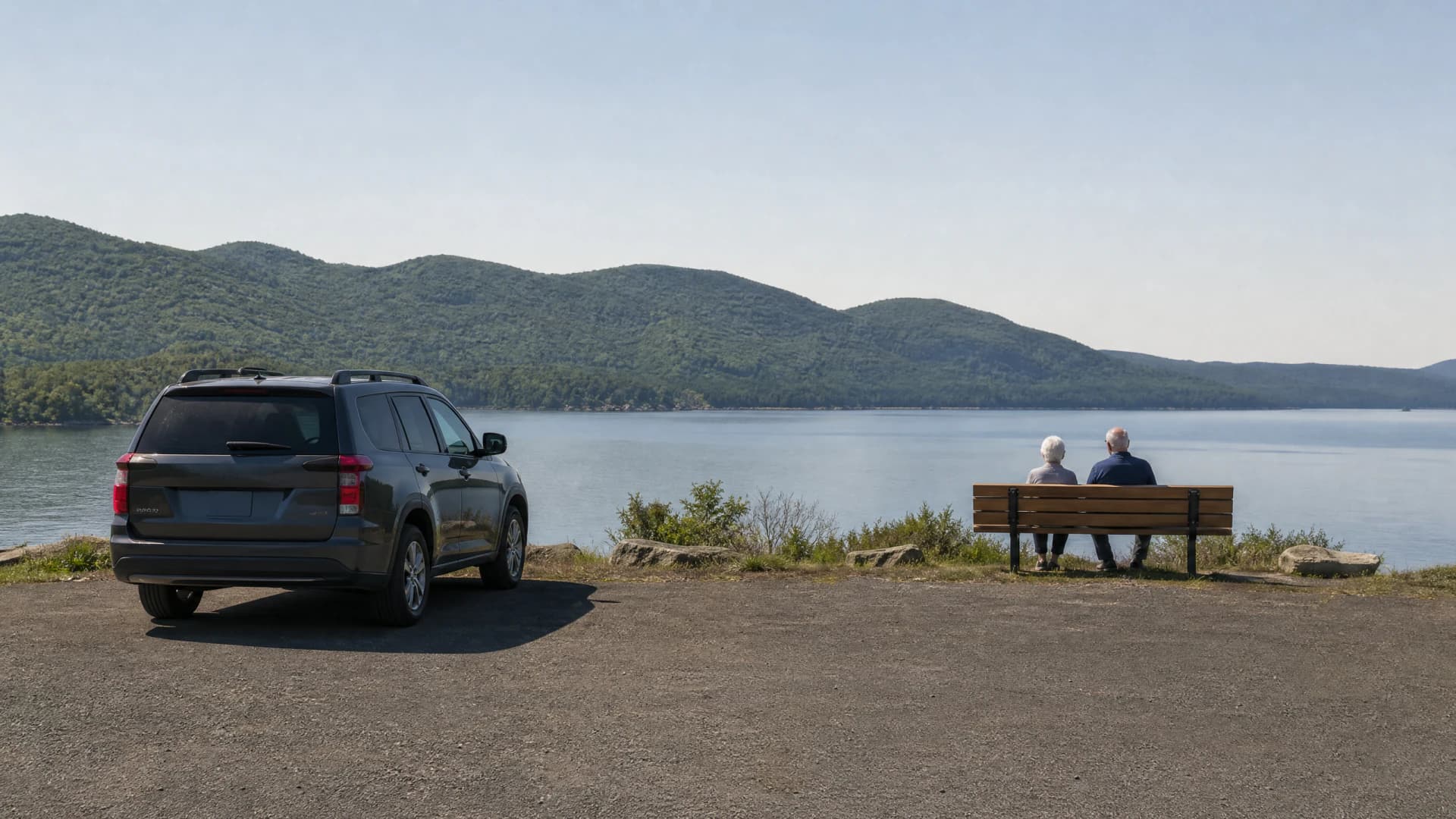
Your carrier won't remind you that the course discount expired. If your certificate is older than three years, the discount drops off at renewal unless you complete a new course and resubmit.
Related Articles





How Pennsylvania's Approved Course List Works
Pennsylvania does not publish a single statewide list of approved course providers on the Department of Transportation website. Approval is handled by individual insurers, who file their accepted course providers with the Insurance Department. This means the course your neighbor completed for State Farm may not qualify for your Erie Insurance policy unless Erie also filed that provider as approved.
Before you enroll in any course, call your current carrier and ask which defensive driving course providers they accept for the mature-driver discount. AARP and AAA both offer widely accepted programs in Pennsylvania, but acceptance is carrier-specific. Some carriers accept online courses; others require classroom attendance. Course costs vary, but the carrier does not reimburse the fee. You pay for the course, complete it, receive a certificate, and submit the certificate to your carrier.
The certificate is valid for three years from the course completion date, not from the date you submit it. If you complete the course in January 2025 and your renewal is in June 2025, the discount applies starting at that June renewal and continues through the June 2028 renewal. When the certificate expires, the discount disappears at the next renewal unless you complete a new course and resubmit. The carrier will not send you a reminder that the expiration is approaching.

Low-Mileage Programs for Drivers Who No Longer Commute
The mature-driver discount addresses your age and experience. Low-mileage and usage-based programs address the fact that you now drive 8,000 miles a year instead of 18,000. Both discounts can apply simultaneously, but the low-mileage program also requires enrollment.
Progressive's Snapshot, GEICO's DriveEasy, Nationwide's SmartRide, and State Farm's Drive Safe & Save all operate in Pennsylvania. Each program uses a mobile app or a plug-in device to verify your annual mileage and, in some cases, your driving behavior. If your mileage is genuinely low and your driving patterns are consistent, these programs can reduce your premium by a percentage that exceeds the statutory mature-driver discount. The exact reduction is not disclosed upfront; it appears at renewal after the monitoring period.
The monitoring period is the friction point. Some retirees object to the telematics device or the app's location tracking. Others complete the monitoring period, see a modest reduction, and then watch the discount shrink at the next renewal when the program recalibrates. If you're uncomfortable with ongoing monitoring, ask whether the carrier offers a flat low-mileage discount based on an annual odometer declaration instead. Erie Insurance and some regional carriers offer this structure, though the percentage is typically lower than the telematics-verified option.
$15,000
PA Bodily Injury Minimum Per Person
Pennsylvania's minimum liability limits are $15,000 per person for bodily injury, $30,000 per accident, and $5,000 for property damage. These limits were set decades ago and do not reflect current medical costs or vehicle values. Many retirees carry liability limits well above the minimum because retirement assets are exposed in an at-fault accident where damages exceed your coverage.
Pennsylvania auto insurance state minimum requirements
Whether Full Coverage Still Earns Its Cost
Your vehicle is paid off, you drive it lightly, and the collision and comprehensive premiums make up half your total bill. Whether you drop them is a judgment call about the vehicle's current value and what you would pay out-of-pocket to replace it if it were totaled or stolen.
If your vehicle's current market value is below $4,000 and your annual collision and comprehensive premium exceeds $800, the coverage is returning less than five years of premium before the vehicle's value drops to zero. That's the conventional threshold where many retirees drop physical-damage coverage and self-insure the replacement risk. If the vehicle is worth $10,000 and you cannot replace it out-of-pocket without financial strain, keeping collision and comprehensive makes sense even though the vehicle is paid off. The loan status is irrelevant; the question is replacement cost versus premium cost.
Compare Erie Carriers With Your Discount Stack Active
The lowest premium for a retired driver in Erie comes from stacking the mature-driver discount, a low-mileage or usage-based program, and liability limits appropriate to your asset exposure. No single carrier offers the best rate for every retiree because discount structures, underwriting models, and mileage-verification methods vary.
Request quotes from at least four carriers writing in Erie: one preferred-tier carrier like Erie Insurance or State Farm, one standard-tier carrier like GEICO or Progressive, one that emphasizes usage-based pricing, and one regional carrier if you prefer agent service over online quoting. Provide the same coverage structure to each: your chosen liability limits, the same deductibles, and confirmation that you have completed or will complete the state-approved mature-driver course. Ask each carrier explicitly what their mature-driver discount percentage is, whether it requires course completion or applies automatically at age 55, and how their low-mileage program works.
When you receive quotes, compare the total premium with all discounts applied, not the base rate. The carrier with the lowest base rate may have the highest post-discount premium if their mature-driver and low-mileage programs are weak. The comparison is structural: which carrier's discount stack fits your actual profile best. If you're quoted a rate and the mature-driver discount is not reflected, ask why. The agent may not have coded your birthdate correctly, or the carrier may require the course certificate upfront before applying the discount to the quote.
Which Erie Carriers Offer More Than the Statutory Floor
State Farm, Erie Insurance, and Nationwide all write standard and preferred-tier business in Erie and all comply with the state mandate. Each sets its own mature-driver discount percentage above the statutory floor, but those amounts are filed with the Pennsylvania Insurance Department and not disclosed in marketing materials. When you call for a quote, ask explicitly what the mature-driver discount percentage is for your age bracket and whether it requires course completion or applies automatically at age 55. Some carriers separate age-based discounts from course-based discounts; the statute guarantees the course-based one.
GEICO and Progressive both write in Erie and both offer online quoting. Their mature-driver programs layer on top of usage-based options like Snapshot and DriveEasy, which can reduce premiums further if your annual mileage dropped below 7,500 miles. The telematics discount and the mature-driver discount stack, but both require active enrollment. Neither appears unless you ask. Dairyland and The General write non-standard and high-risk business in Pennsylvania and also comply with the mandate, so drivers with a recent violation or lapse can still access the statutory discount once their course certificate is filed.
Get Your Free Quote
Get My Pennsylvania Retiree Auto Insurance QuoteFrequently Asked Questions
Do I qualify for Pennsylvania's mature-driver discount if I'm 65 but haven't taken a defensive driving course?
Pennsylvania law requires insurers to offer a mature-driver discount of at least 5% to drivers age 55 and older, but the discount applies only after you complete a state-approved defensive driving course and submit the certificate to your carrier. Age alone does not trigger the discount. Call your insurer to confirm which course providers they accept before enrolling.
How long does Pennsylvania's mature-driver course certificate last?
The certificate is valid for three years from the course completion date. When it expires, the discount drops off at your next renewal unless you complete a new course and resubmit the certificate. Your carrier will not send a reminder that the expiration is approaching, so mark the expiration date when you first submit the certificate.
Can I stack Pennsylvania's mature-driver discount with a low-mileage program?
Yes. The mature-driver discount and low-mileage or usage-based programs address different risk factors and can apply simultaneously. You must enroll in both separately: complete the approved defensive driving course for the mature-driver discount and enroll in your carrier's telematics or odometer-declaration program for the mileage reduction. Ask your carrier how the two discounts combine when you request a quote.
Should I drop collision and comprehensive coverage on my paid-off car in Erie?
If your vehicle's current market value is below $4,000 and your annual collision and comprehensive premium exceeds $800, the coverage may cost more over time than the vehicle is worth. If the vehicle is worth $10,000 or more and you cannot replace it out-of-pocket, keeping physical-damage coverage makes sense regardless of loan status. The decision turns on replacement cost versus premium cost, not whether the vehicle is paid off.
Do all carriers writing in Erie offer the same mature-driver discount percentage?
No. Pennsylvania law requires every carrier to offer at least 5%, but many exceed the statutory floor. The exact percentage above 5% is set by each carrier's filed rate structure and is not published in marketing materials. When you request quotes, ask each carrier explicitly what their mature-driver discount percentage is and whether it requires course completion or applies automatically at age 55.
What happens if I complete a mature-driver course my Erie carrier doesn't accept?
The discount will not apply. Pennsylvania does not publish a single statewide list of approved course providers; approval is carrier-specific. Before you enroll in any course, call your current carrier and ask which defensive driving course providers they accept. If you've already completed a course your carrier doesn't accept, you'll need to complete an approved course to activate the discount.